
who helped shape the montavilla of today?
The answer may surprise you. With this history project, METBA aims to show you the real history of Montavilla and the incredible pioneers who created our present-day neighborhood. Researched and written by local historian, Patricia Sanders.
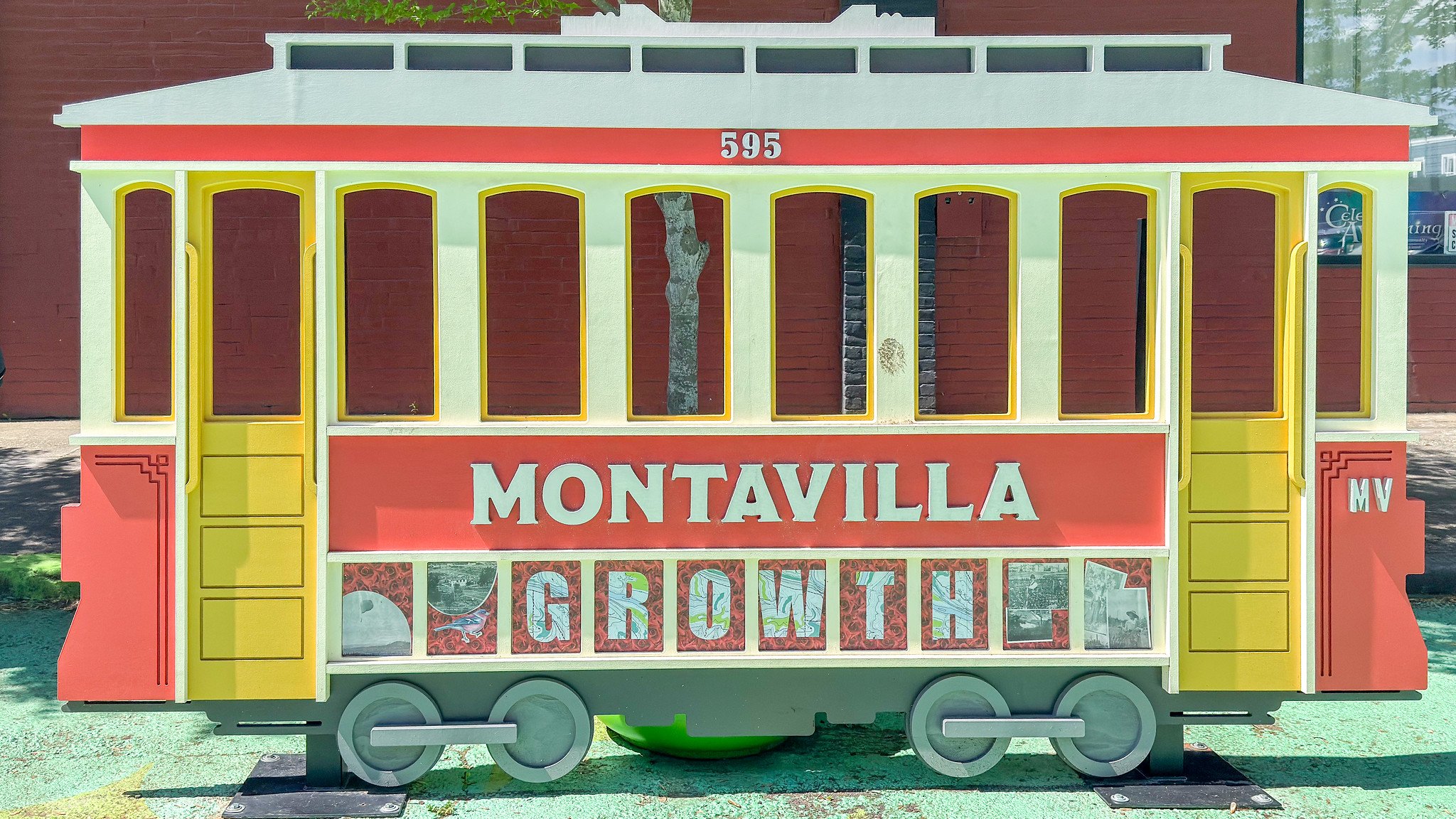
View the installation: Montavilla Plaza, at SE 79th and Stark Street.
montavilla’s
historic trolley line
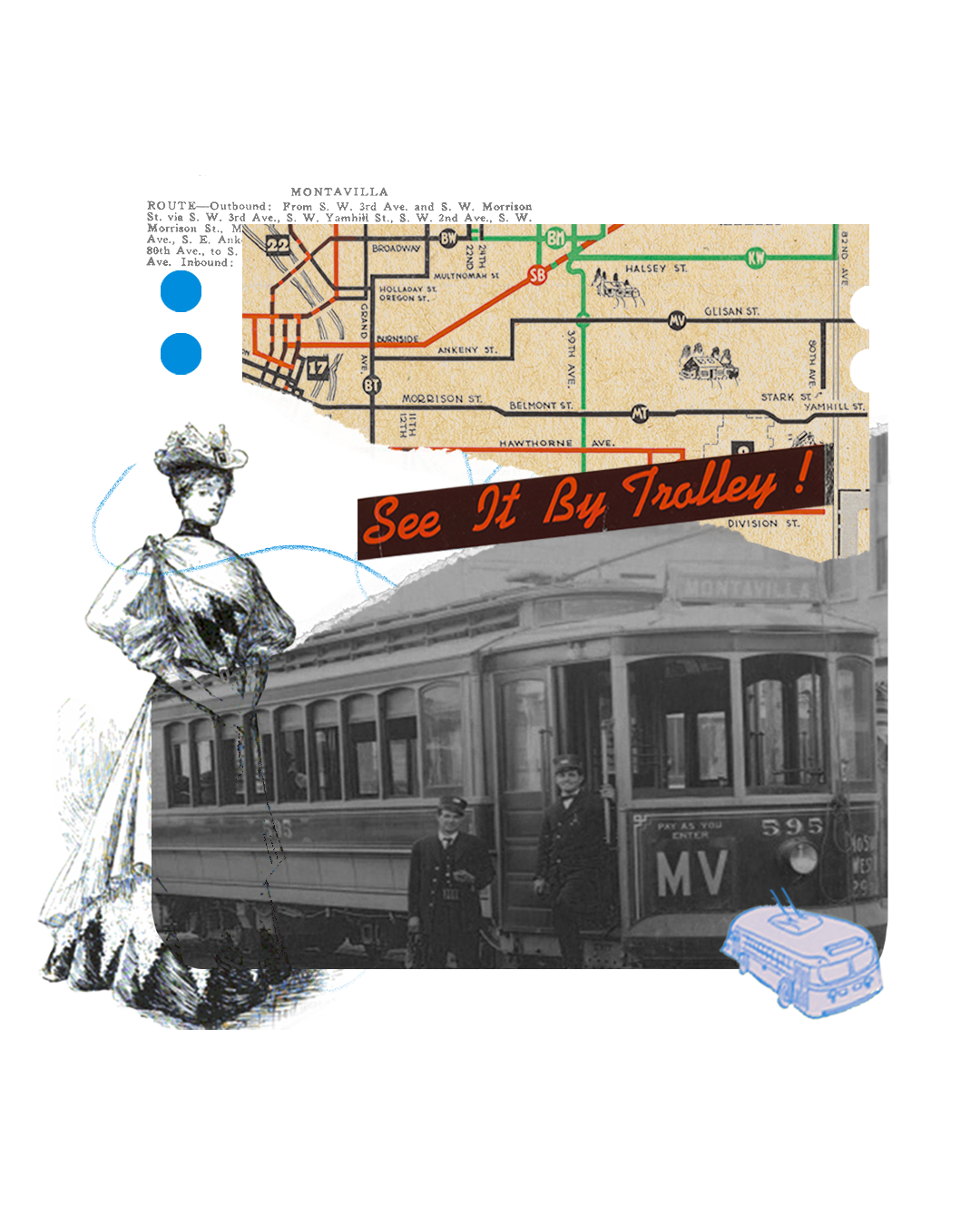
On July 26, 1892, the City & Suburban Railway opened the Fairview Branch, soon renamed the Montavilla line, connecting what is now SE Grand Avenue to NE 82nd via Glisan Street. For just 10 cents, riders could travel to work, school, shops, amusement parks, and back home again. This affordable, accessible trolley service made it possible to live farther from downtown helping to grow neighborhoods like Montavilla at a rapid pace in the early 20th century.
By 1900, a single-track spur on 80th Avenue brought passengers right to Montavilla. Developers, shop owners, and families followed. Even today, you can trace the old tracks buried beneath 80th Avenue by the subtle dip in the street. The line served the neighborhood until 1948 as a lifeline of a growing Portland community.
Trolley artist Marilyn Shaw changes out the side of the sculpture monthly. Keep your eye out for new exhibitions!
upcoming installations
dr denorval
unthank
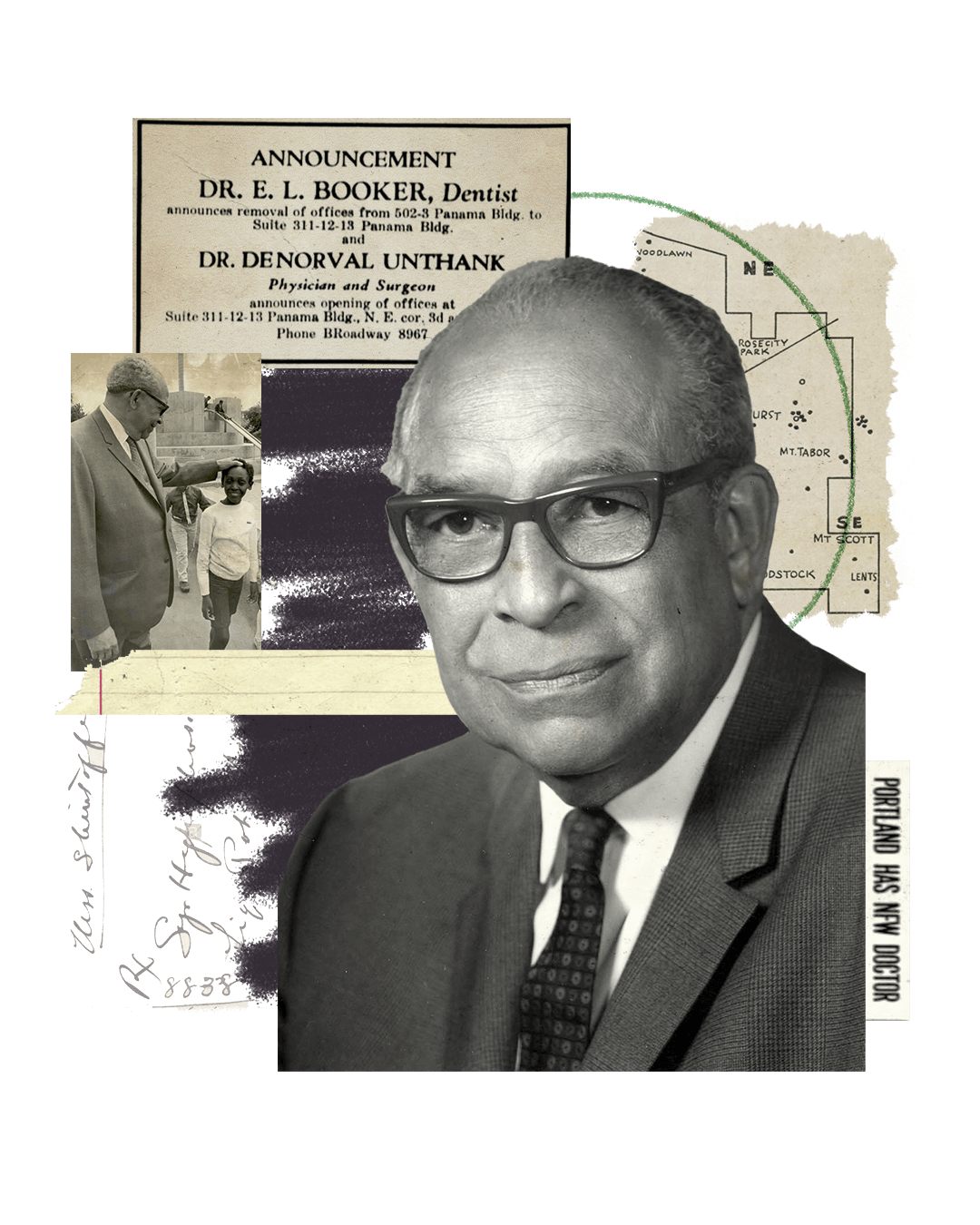
Dr. DeNorval Unthank (1899-1977) relocated his medical practice from Kansas City, Missouri to Portland in 1930 to serve the local Black community. For a brief time in the early 1930s, Dr. Unthank and his family made Montavilla their home. Dr. Unthank had his own private practice and was on staff at Good Samaritan, Providence, St. Vincent, and Emanuel Hospital, where he joined its board of directors in 1971. In addition to his medical contributions to the Portland community, Dr. Unthank was an avid champion of civil rights. In 1940, he was elected president of Portland’s NAACP. In 1943, he joined the Portland City Club, where he drew attention to discriminatory practices. He co-founded the Portland Urban League in 1945, and in 1953, he helped pass Oregon’s Civil Rights Bill, which overturned the state law banning interracial marriage.
Source: https://montavilla.net/2025/02/21/montavilla-history-questions-answered-notable-residents-pt2/
generations of Japanese berry farmers
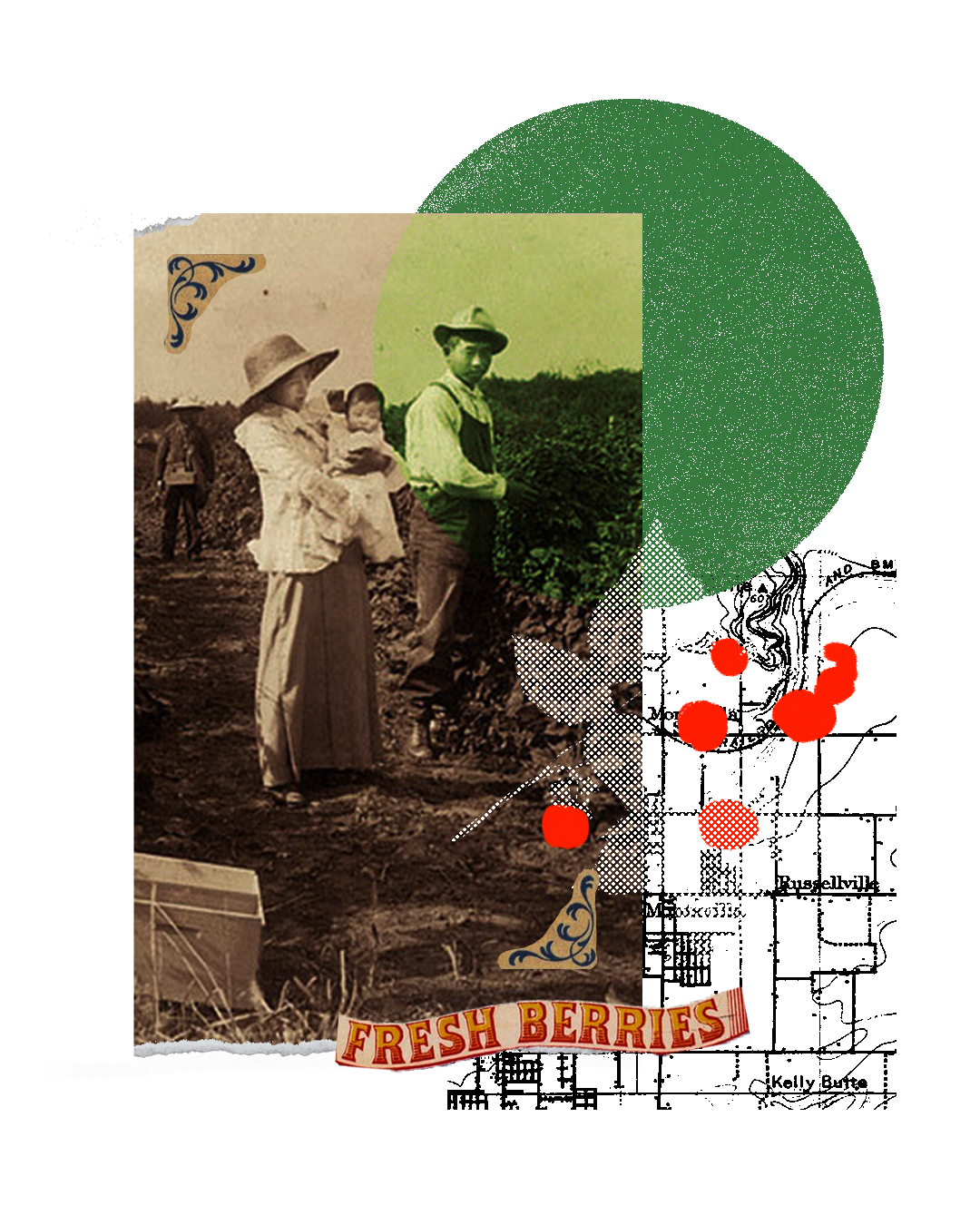
In the early 1900s, many Japanese men migrated to the United States in search of better jobs. Some worked on the railroads, others became farm workers. Eventually, many leased or bought their own farms and grew berries and vegetables. By 1911, about 200 Japanese-Americans resided in the Montavilla area. The first Japanese-American producers association in Oregon was established in Montavilla. The Montavilla Japanese Language School was founded to teach Japanese to Japanese-American children and to preserve traditional Japanese culture. Bill Naito (1925-1996) was one of those children.
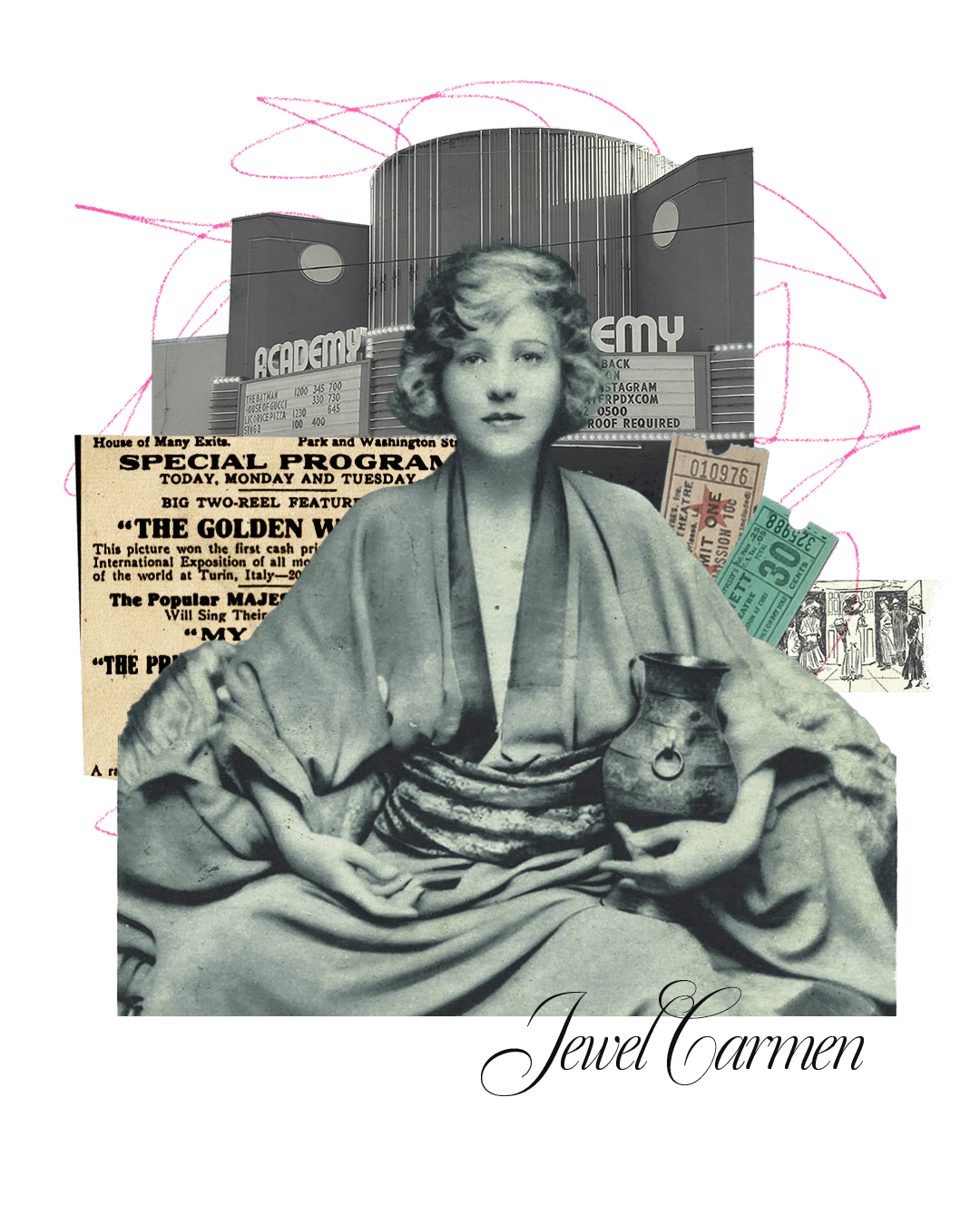
the belle of
montavilla
Montavilla entrepreneurs Fred Teeny (1914-1979) and Lillian Shaheen Teeney (1920-2009) opened the Academy Theater in 1948. Designed in the popular Art Deco style by architect James William De Young (1885-1965), it was then one of Montavilla’s most modern buildings. The Academy showed second-run movies in its 600-seat auditorium. The theater closed in 1974 and, for a few years, housed Nickel Ads. In 2006, the Academy was restored to its original look and reopened as a theater-pub. Besides having a stellar movie theater that still survives, Montavilla was also the childhood home of one of the silent screen’s most famous stars: Jewel Carmen (1897-1984), called “the Belle of Montavilla” by The Oregon Journal.
Source: https://montavilla.net/2025/05/22/montavilla-history-questions-answered-notable-residents-pt3/